Bioenergy
-
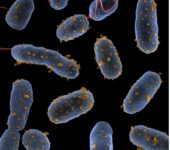
Bacterium Pseudomonas putida and Conversion
National Renewable Energy Laboratory scientists engineered the bacterium Pseudomonas putida to rapidly turn lignin in corn leaves, stalks, and cobs into the building block for making more sustainable nylon.
-

Hydrosolate Fermenters
A hydrolysate experiment in process in the Great Lakes Bioenergy Research Center’s Experimental Fermentation Facility.
-
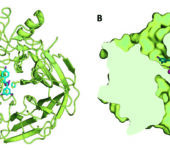
Crystallography Study Benefits Bioenergy Industry
During the deconstruction process, lignin is partially converted to molecules like stilbenes, which occur naturally in plants and some bacteria and may play a role in plant pathogen resistance. Enzymes such NOV1 could be used to produce valuable bioproducts from the breakdown of stilbenes and similar molecules.
Joint Bioenergy Institute and Great Lakes Bioenergy Research Center researchers recently reported the atomic-level structure of NOV1 (pictured above), gaining insight into how the enzyme breaks down a stilbene substrate into two smaller compounds. (A) This protein fold view highlights the placement of iron (yellow), dioxygen (red), and resveratrol, a representative substrate (blue), in the active site of the enzyme. (B) This surface slice representation shows the shape of the active site cavity and the arrangement of iron, dioxygen, and resveratrol.
-
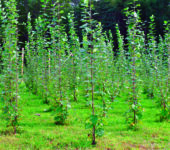
Bioenergy Crop Poplar
Developing Better Plants for Biofuels. Building a successful lignocellulosic biofuels industry depends, in part, on developing specialized biofuel crops that are optimized for deconstruction into sugars and fermentation into biofuels and bioproducts. Poplar is one of the nonfood bioenergy crops studied at Joint Bioenergy Institute.
-
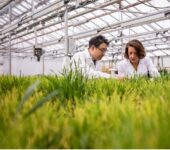
Bioenergy Crop Research at GLBRC
Federica Brandizzi (right), a Michigan State University (MSU) Foundation professor and Great Lakes Bioenergy Research Center science director, and SangJin Kim, an MSU research assistant professor and GLBRC researcher, examine research crops.
-
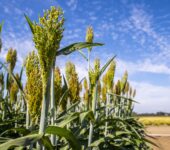
Bioenergy Crop Sorghum
The DOE Bioenergy Research Centers are developing plant feedstocks such as sorghum for sustainable biofuels and bioproducts.
-
-

Biojet Fuels and Optimizing the Production Pipeline
Joint Bioenergy Institute scientists Nawa Baral (left) and Daniel Mendez-Perez (right) work on biojet fuel samples. Their research team is exploring how advances in production could make the plantbased jet fuels, currently under development at JBEI, price competitive with conventional fossil jet fuels.
-
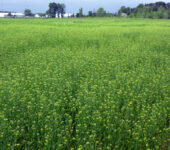
Bioenergy Crop Camelina
The ability to apply transformation and editing technologies to bioenergy crops has remained largely unrealized. Most DOE-relevant bioenergy crops also present unique challenges to plant transformation. Identifying potential crop-specific needs of bioenergy species, along with those of model plants and food crops could serve as a starting point for developing a more comprehensive community solution for advancing transformation and editing technologies across crops.
-
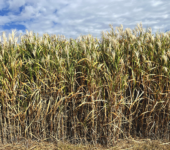
Bioenergy Crop Miscanthus
The ability to apply transformation and editing technologies to bioenergy crops has remained largely unrealized. Most DOE-relevant bioenergy crops also present unique challenges to plant transformation. Identifying potential crop-specific needs of bioenergy species, along with those of model plants and food crops could serve as a starting point for developing a more comprehensive community solution for advancing transformation and editing technologies across crops.