Bioenergy
-
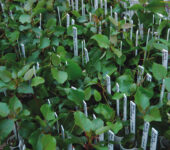
Bioenergy Crop Research at BESC
Transformed Populus shoots grow in a greenhouse. These plants are altered in targeted cell-wall pathway genes.
-
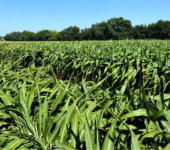
Sorghum Crop in California
Developing Better Plants for Biofuels. Building a successful lignocellulosic biofuels industry depends, in part, on developing specialized, high-yielding biofuel crops that incorporate traits for optimized deconstruction, conversion, and sustainability. Pictured here, the bioenergy crop sorghum is being grown at the University of California–Davis, a JBEI partner.
-
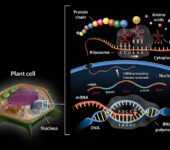
Expressing the Genome in Plant Cells
Plants are eukaryotes—organisms with cells that contain a membrane-bound nucleus. A eukaryote’s DNA is in the nucleus where mRNA is transcribed. The genes in plants and other eukaryotic organisms, such as humans and animals, contain noncoding regions called introns. In the nucleus, introns are removed from mRNA transcripts, and the remaining coding regions (called exons) are spliced back together. Once edited, the mRNA is transported outside the nucleus for translation into proteins by ribosomes.
-
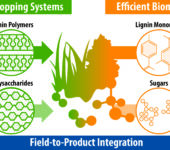
Path of Efficient Biomass Conversion
The Great Lakes Bioenergy Research Center is developing sustainable biofuels and bioproducts from all usable portions of dedicated energy crops grown on marginal, nonagricultural lands.
-
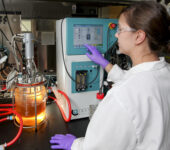
Optimizing Microbes Biomass Deconstruction
Kelsey Yee operates a process-controlled Applikon fermenter to evaluate how well Caldicellulosiruptor obsidiansis (a consolidated bioprocessing microbe) ferments simple sugars derived from poplar pretreated with dilute acid.
-
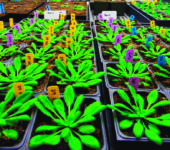
Model Plant Arabidopsis
Assay Tool for Characterizing Plant Sugar Transporters. A family of six nucleotide sugar transporters never before described were characterized in Arabidopsis (pictured), a model plant for research in advanced biofuels.
-
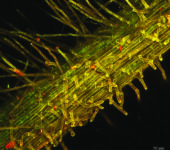
Rhizosphere Microbes Colonizing Poplar Roots
Characterizing Plant-Microbe Interfaces. This confocal image shows the microbial isolate Variovorax CF313 (green) colonizing transgenic Populus PdKOR roots. Better understanding of the symbiotic relationships between organisms can help researchers engineer hardier bioenergy crops and more productive ecosystems.
-
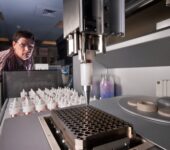
Analyzing Biomass Recalcitrance
National Renewable Energy Laboratory senior scientist Steve Decker watches a robot dispense samples of powdered biomass into a reactor plate as part of a high-throughput recalcitrance pipeline for studying sugar release in potential biofuel feedstocks.
-
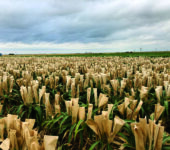
Bagged Sorghum Flowers
Developing Better Plants for Biofuels. Building a successful lignocellulosic biofuels industry depends, in part, on developing specialized biofuel crops that are optimized for deconstruction into sugars and fermentation into biofuels and bioproducts. Pictured is sorghum, a bioenergy crop being grown at the University of California–Davis, a JBEI partner. The sorghum flowers are bagged to prevent pollen exchange.
-
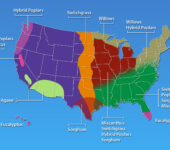
Approximate Geographic Distribution of Potential Biomass Crops
Multiple crop types designed for various agroecosystems will require continued development to realize biomass yields for large-scale production of biofuels and bioproducts. As research progresses, new crop types could be added and the boundaries of their likely ranges could change. Agricultural residues (e.g., wheat straw, rice hulls, and corn stover) are not included on this map.